
-
Digital Marketing
-
2025-11-28

Ashis Kumar Biswal
Ashis Kumar Biswal is a skille...

The views and opinions expressed in this blog are solely those of the author and do not necessarily reflect the official policies or positions of any individual, organization, or government body. While every effort has been made to provide accurate and up-to-date information, the author makes no representations as to the completeness or accuracy of the content. Readers are encouraged to conduct their own research and verify facts before drawing conclusions. The author shall not be held responsible for any errors or omissions in the information provided.
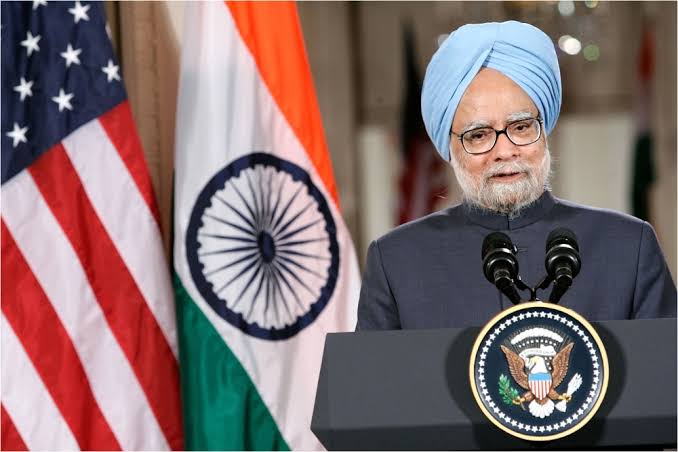
Dr. Manmohan Singh, one of India’s most respected economists and former Prime Minister, played a pivotal role in shaping India’s economic trajectory. As both a technocrat and a politician, his leadership bridged the gap between economic theory and political action, helping transform India into one of the world’s fastest-growing economies. Dr. Singh’s tenure is best known for the 1991 economic reforms, which introduced liberalization, privatization, and globalization (LPG), setting the stage for India’s economic rise on the global stage.
Dr. Singh’s economic philosophy focused on inclusive growth, financial inclusion, and social welfare. His efforts to make banking accessible to rural India, encourage foreign investment, and foster innovation laid the foundation for many of today’s advancements in sectors like IT, telecommunications, and education. Furthermore, his leadership saw the introduction of landmark policies such as the Direct Benefit Transfers (DBT) and Aadhaar, aiming to improve transparency and reduce corruption.
However, his tenure was not without challenges. Issues such as policy paralysis, inflation, and corruption allegations during UPA-II led to criticism, particularly in his second term as Prime Minister. Despite these hurdles, his legacy remains strong, with many of his reforms continuing to benefit the Indian economy today.
In this blog, we explore Dr. Singh’s economic contributions, the challenges he faced, and the lasting impact of his leadership on India’s development.


Manmohan Singh’s journey to becoming a key figure in the Indian economy began with an exceptional academic background. Born in 1932 in Gah, Punjab (now in Pakistan), he displayed a strong interest in education from an early age.
He earned his bachelor's and master’s degrees in Economics from Panjab University, followed by a second master’s degree from the University of Cambridge. Later, he completed his doctorate (Ph.D.) in Economics from the University of Oxford, establishing himself as a highly skilled economist.
Before stepping into politics, Dr. Singh held several prestigious positions. He worked with the International Monetary Fund (IMF) and the United Nations Conference on Trade and Development (UNCTAD). He also served as the Governor of the Reserve Bank of India (RBI) and later as the Deputy Chairman of the Planning Commission.
Dr. Singh’s economic philosophy revolved around liberalization, inclusive growth, and reducing poverty. His vision was to open up India’s economy to global markets while ensuring social welfare. These principles laid the foundation for many of his groundbreaking reforms in the years to come.
The early 1990s marked a turning point in India’s economic history, and Dr. Manmohan Singh played a pivotal role in this transformation.
By 1991, India faced a severe economic crisis characterized by a balance-of-payments problem, skyrocketing fiscal deficits, and declining foreign exchange reserves. The country was on the brink of defaulting on its external debt, making bold reforms inevitable.
As Finance Minister under Prime Minister P.V. Narasimha Rao, Dr. Manmohan Singh introduced the revolutionary Liberalization, Privatization, and Globalization (LPG) reforms. Key measures included:
He also implemented policies to reduce the fiscal deficit, streamline tax structures, and improve the ease of doing business. These reforms helped stabilize the economy and restored investor confidence.
The LPG reforms led to significant improvements:
The reforms initiated by Dr. Singh laid the foundation for India’s emergence as a global economic powerhouse. The shift to a market-driven economy has enabled sustained growth, technological advancements, and increased global integration
Dr. Manmohan Singh’s tenure as the Prime Minister of India from 2004 to 2014 marked a significant period in the nation’s economic development. His leadership under the United Progressive Alliance (UPA) government had its highs and challenges.
During the first term of the UPA government, India experienced a period of robust economic growth:
The second term was marked by challenges that tested Dr. Singh’s leadership:
Despite these hurdles, Dr. Singh’s steady approach ensured that India remained resilient during a volatile global economic environment. His emphasis on economic stability and social equity left a lasting impact on India’s developmental trajectory.
Dr. Manmohan Singh’s tenure as Prime Minister highlighted his deep commitment to financial inclusion and rural development. His vision was to bridge the gap between urban and rural India by ensuring access to banking, financial services, and welfare schemes for the underserved.
Under his leadership, efforts were made to bring modern banking and financial services to rural areas:
Dr. Singh’s policies significantly improved rural economic participation, reduced poverty, and paved the way for a more inclusive financial system in India. His vision continues to influence India’s rural and financial development strategies today.
Dr. Manmohan Singh strongly believed in the power of knowledge, technology, and innovation to drive India’s economic growth. His policies and initiatives focused on transforming India into a knowledge-based economy, fostering advancements in IT, telecommunications, and education.
Dr. Singh’s advocacy for a knowledge economy has been instrumental in shaping India’s global competitiveness. His vision has made sectors like IT and education cornerstones of India’s economic and technological progress.
While Dr. Manmohan Singh’s tenure as Prime Minister saw remarkable achievements, it was not without criticism and controversies. Some economic and political challenges under his leadership drew significant public and media attention.
Dr. Singh’s calm and composed demeanor often defined his responses to critics:
Despite these controversies, Dr. Singh’s legacy remains influential, with many acknowledging his dedication to economic stability and progress.
Dr. Manmohan Singh’s legacy as a key architect of modern India’s economic journey is marked by his unique ability to balance the roles of a technocrat and a politician. His contributions laid the groundwork for India’s current economic growth and global stature, even as some challenges persisted.
Dr. Singh’s lasting impact is evident in India’s current economic stability and global influence. While his leadership faced criticism in certain areas, his role in shaping modern India’s economic identity remains undisputed.
Dr. Manmohan Singh’s contributions to the Indian economy have left an indelible mark on the nation’s growth story. From spearheading the 1991 economic reforms to driving financial inclusion, his vision transformed India into a more dynamic, globally integrated, and resilient economy.
As a technocrat and leader, he demonstrated an unwavering commitment to economic stability, poverty reduction, and social welfare. His efforts in promoting IT growth, infrastructure development, and education reforms continue to shape India’s progress.
While his tenure faced challenges, Dr. Singh’s legacy as a transformative leader and visionary economist remains an inspiration for future policymakers.
What are your thoughts on Dr. Manmohan Singh’s economic legacy? Share your views in the comments below!
biswalashis2002@gmail.com
Ashis Kumar Biswal is a skilled content writer with a background in Political Science from Pondicherry University. He has a strong understanding of social and political topics, which helps him create meaningful and engaging content.